|
|
|
Northern Gas Pipelines, (Alaska Gas Pipeline, Denali - The Alaska Gas Pipeline, Mackenzie Valley Gas Pipeline, Alaska Highway Gas Pipeline, Northern Route Gas Pipeline, Arctic Gas, LNG, GTL) is your public service, objective, unbiased 1-stop-shop for Arctic gas pipeline projects and people, informal and rich with new information, updated 30 times weekly and best Northern Oil & Gas Industry Links on the Internet. Find AAGPC, AAGSC, ANGTL, ANNGTC, ANGDA, ANS, APG, APWG, ANGTA, ANGTS, AGPPT, ANWR, ARC, CARC, CAGPL, CAGSL, FPC, FERC, GTL, IAEE, LNG, NEB, NPA, TAGS, TAPS, NARUC, IOGCC, CONSUMER ENERGY ALLIANCE, AOGA,AOGCC, RCA and more... 2009 LINKS: FERC Reports to Congress, 1, 2, 3, 4, 5, 6, 7....; USGS Arctic Gas Estimates; MMS hearings: RDC, Our NGP, AJOC, DH, ADN, KTUU; Enstar Bullet Line: Map and News Links; ANGDA; Alaska Energy Forum; Prosperity Alaska 2008 LINKS:
Shell Alaska OCS Study;
WASHINGTON: Alaska Natural Gas Pipeline Act; History of H.R. 4; DOE Energy Bill Position, 6-02; Daschle-Bingaman Energy Bill (Alaska, Sec. 1236 & tax credit, Sec. 2503 & H.R. 4 Conferees), Tax Credit; See amendments, "Energy Policy Act of 2002"; "Alaska Natural Gas Pipeline Act of 2001 (Draft)" & Background Paper, 8-9-01;Alaska Legislature Joint Committee position; Governor's position; Governor's 10-Point Plan; Anadarko Analysis; U.S. Senate Energy Committee Testimony, 10-2-01 - text version; U.S. Senate Energy Committee Testimony, 9-14-00; Report on the Alaska Natural Gas Transportation Act of 1971, prepared by staff of the Federal Energy Regulatory Commission, 1-18-01 ALASKA: 1-23-03, Governor Frank Murkowski's State of the State Speech; 2002 DRAFT Recommendations to 2003 Legislature; '02 Alaska Legislation; Alaska Highway Natural Gas Pipeline Policy Council; Joint Legislative Gas Pipeline Committee; 9-01 Alaska Models: Canadian Routes, LNG, GTL; HR 4 Story; Cook Inlet Supply-Demand Report: AEDC; Commonwealth North Investigation & Our Article; Report: Backbone; Legislature Contacts; State Gas Pipeline Financing Study; 5-02 Alaska Producer Update; Kenai: "Oil & Gas Industry Issues and Activities Report, 11-02"; Alaska Oil & Gas Tax Structure; 2-27-02 Royalty Sale Background; Alaska Gas Pipeline Office opens, 7-01, and closes, 5-02; Betty Galbraith's 1997-1998 Chronology. Our copy. CANADA: 1-10-03, "Arctic Gas Pipeline Construction Impacts On Northern Transp."-Transport Canada-PROLOG Canada Inc.-The Van Horne Institute;Hill Times Reports, 8-30-02; 9-30-02, Cons. Info. Requirements; CBC Archives, Berger Commission; GNWT Economic Impact Study, 5-13-02; GNWT-Purvin & Gertz Study, 5-8-02; Alberta-Alaska MOU 6-02; Draft Pan- Northern Protocol for Oil and Gas Development; Yukon Government Economic Effects: 4-02 & PPT; Gas Pipeline Cooperation Plan Draft & Mackenzie Valley Environmental Impact Review Board; Mackenzie Valley Pipeline MOU Draft, 6-01; FirstEnergy Analysis: 10-19-01; Integrated Delta Studies; National Post on Mackenzie Pipeline, 1-02;Northern Pipeline Act; Haida Nation v. British Columbia; Indian Claims Commission; Skeena Cellulose decision -- aboriginal consultations required, 12-02; Misc. Pipeline Studies '02 COMPANIES: Alaska Gas Producers Pipeline Team Newsletter, 7-27-01; APG Newsletter: 5-02, 7-02 & 9-02; ArctiGas NEB PIP Filing Background; NRGPC Newsletter: Fall-02; 4-02 ArctiGas Reduces Field Work; BP's Natural Gas Page; Enbridge Perspective; Foothills Perspective; Williams Perspective; YPC Perspective, 7-02 MEDIA REFERENCE: Alaska Journal of Commerce; Alaska Inc. Magazine; Anchorage Daily News; Canadian Broadcasting Corporation; Fairbanks Daily News Miner, Juneau Empire; Northern News Services; Oil & Gas Reporter; Petroleum News Alaska; Whitehorse Star, etc. EXTENDED CONFERENCE NEWS: Alaska Support Industry Alliance, Anchorage Chamber of Commerce, Canadian Institute, Insight Information, Inuvik Petroleum Shows, International Association of Energy Economists, Resource Development Council for Alaska, Ziff Energy Group
|
Northern Gas Pipelines: Mackenzie Valley Pipeline Project
(Please see numerous references to this project in the news archives, and our editorials here.) First envisioned in the mid-1970s, a pipeline designed to tap only Mackenzie Delta reserves has gained new fashion, a new set of supporters and a modified route in 2002 resembling the Arctic Gas Mackenzie Valley routing of the 1970s. The Canadian government is properly interested in connecting Mackenzie Delta reserves to North America's transmission grid for several reasons: a. commercializing royalty interest, b. expanding natural resources tax base, and c. providing economic opportunity for northern communities and citizens. While construction of a 'northern route', also tapping Prudhoe Bay reserves, would achieve these goals, proponents of this Delta-only project envision it as less complex and more likely to accomplish their goals in a timely fashion. Proponents of the project are Mackenzie Delta producers and the Mackenzie Valley Aboriginal Pipeline Corporation (MVAPC) representing 36 indigenous landowners through whose territory the pipeline would pass. Last year's memorandum of understanding, included below, best summarizes proposed relationship of the parties. At this writing (1-02) not all parties have agreed to sign the document, and meetings later in the year will determine the outcome. However, the 1-7 announcement below, "...signals the producers' intent to move from the feasibility study phase to the project definition phase." To assist in understanding basic project facts, we provide: 2. Summary statements, provided by APG. 3. The draft memorandum of understanding. 4. The draft gas pipeline Cooperation Plan being promulgated by the various agencies.
1. Mackenzie Valley Pipeline in the news. (THIS IS JUST A SAMPLING OF THE NEWS AND PHOTOS PRESERVED FOR YOUR FUTURE REFERENCE IN THE ARCHIVES.) 2002 Reports: 11-4-02:
INUVIALUIT REGIONAL CORPORATION. IRC's September/October Newsletter came
today
"APG needs to bring its share of funding to this Phase which
is expected to be $70 milli "The Executive Committee consists of Nellie Cournoyea (Chair, NGP Photo-above), Fred Carmichael (Gwich'in, NGP Photo-above), Gordon Yakeleya and Frank T'seleie (Sahtu), and Doug Cardinal (Deh Cho, NGP Photo-right)...." 1-25: Financial Post by Carol Howes, CALGARY - As a 24-year-old Sahtu leader, Stephen Kakfwi (Photo-left) once - In the Mackenzie Delta, four gas producers led by Imperial Oil Ltd. said this month they will proceed with plans to build a pipeline to move gas from Inuvik .... Groups representing about 75% of aboriginals in the Northwest Territories have signed an agreement .... - Foothills Pipe Lines Ltd., owned jointly by Calgary-based TransCanada PipeLines Ltd. and Vancouver-based Westcoast Energy Inc., has dusted off its proposal first examined in the 1970s and known as the Alaska Natural Gas Transportation System. It is a southern route .... Earlier this month, Foothills and its partners submitted its proposal to gas producers in Alaska.... - Last week, a group including Harvie Andre (Photo) a former federal Cabinet minister and Texan investment - Gas producers in Alaska are in the final stages of a $100-million feasibility study to examine construction of their own southern Alaska Highway route, or a northern over-the-top route, and are expected to announce a decision within the next few months. Their preliminary estimates call for a US$17-billion Alaska Highway pipeline or a US$15-billion over-the-top route. To date, neither route appears to be economic. They have also put forward a number of conditions to be met by Alaska in order to proceed, such as enabling legislation to hasten the regulatory process. Enbridge, while it has not put forward any formal proposals, has also been working behind the scenes .... "I think confusion lies in who is doing what. But at the end of the day everybody understands what they're trying to do," said Mr. Lacey. The stakes involved in a northern pipeline are huge. Alaska's North Slope holds an estimated 35 trillion cubic feet of known reserves, while the Mackenzie Delta holds about nine trillion cubic feet. The exploration potential is even larger, with an estimated 65 trillion cubic feet waiting to be discovered in Alaska and a similar volume .... According to submissions to the U.S. Senate committee on energy and natural resources last fall, the cumulative economic impact in Alaska in developing its reserves is estimated at 160,000 jobs, with a boost of US$300-million to the U.S. gross domestic product. ... While Alaska legislators oppose a subsea pipeline, Mr. Kakfwi said he believes the momentum is shifting. The over-the-top option is shorter and in the long run would provide a better return to Alaska's government, he said. "At some point or another those will become rather compelling considerations." Regardless of which route and which proposal is chosen -- and the ultimate decision lies with oil and gas producers -- a northern pipeline faces one of the most extensive and complex regulatory exercises ever to unfold in Canada and the United States even before a final decision is made to construct. ... There is also potential for lengthy litigation. While Foothills and its partners are authorized to build the pipeline in Alaska, their decades-old authority is likely to be challenged in court by other pipeline companies. An over-the-top route faces staunch opposition from .... "Clearly, [producers] would like to [go over the top] for one simple reason: It's shorter. But other factors come in to play," said Bob King, a spokesman for Tony Knowles, Governor of Alaska. "Ultimately, the economic feasibility is going to drive whatever choice is made. It has to meet the test of the marketplace, which will decide." While some of the enthusiasm for a northern pipeline has slipped because of the decline in natural gas prices -- down 70% from last year's levels -- most industry observers agree it is not a matter of "if" a northern gas pipeline is built, but "when." ... By 2015, demand for natural gas is projected to soar to 31.3 trillion cubic feet a year in North America from the current 24 trillion cubic feet as production .... The mammoth gas reserves of the Canadian and U.S. Arctic constitute the only major proven new supply of natural gas for North America. "Obviously, with the economy turning a little bit sour, is it going to slow it down?" asked Mr. Sartore. "Yes. Is it going to slow it down significantly? I just think it's a matter of a year or two in delay. It's going to come and certainly in all of our lives -- and, hopefully, all of our careers." 1-11: WHITEHORSE STAR, by Chuck Tobin: Ground-floor involvement by aboriginal people in the proposed development of a Mackenzie Valley pipeline is a success story in waiting, says an aboriginal leader. Nellie Cournoyea (Photo) chair of the Mackenzie Valley Aboriginal Pipeline Corp., told the Star earlier this week the 1-10: Northern News Services , by Richard Gleeson, Yellowknife - The most lasting benefit of a Mackenzie Valley pipeline -- if one is built -- may have nothing to do with oil or gas. Many Northern leaders see the
1-9: No stakeholder group knows northern development issues from a more personal perspective than
1-8: NATIONAL POST by Carol Howes and Claudia Cattaneo-CALGARY -A consortium of oil and gas producers in the Mackenzie Delta has moved ahead of a competing group in Alaska in the race to bring Arctic gas to North American consumers. (Comment-Northern Gas Pipelines believes the two producer groups are not in competition with each other. Delta gas will be needed for oil sands development in Canada. The more remote North Slope reserves will be required by Lower 48 demand at such time as gas prices are projected to support a project. There are, however, a northern and southern route competing for the transmission of the Alaska reserves. -dh) * CBC-YELLOWKNIFE - Gas producers and their aboriginal partners in northern Canada have decided to move ahead with plans to build a natural gas pipeline down the Mackenzie River Valley by filing a formal application. * YELLOWKNIFE -- The chairs of the boards and agencies responsible for assessing and regulating energy developments in the Northwest Territories released their draft Cooperation Plan today for public comment. The Cooperation Plan outlines, in principle, how the parties would coordinate their response to any proposal to build a major natural gas pipeline through the Northwest Territories. The public will have until March 8, 2002 to provide comments on this plan. The draft Cooperation Plan has been presented by the Chairs of the Boards and Agencies to the Minister of Indian Affairs and Northern Development, the Honourable Robert Nault. The parties involved in developing the draft Cooperation Plan are: the National Energy Board, the Canadian Environmental Assessment Agency, the Department of Indian Affairs and Northern Development, the Mackenzie Valley Environmental Impact Review Board, the Mackenzie Valley Land and Water Board, the NWT Water Board, the Government of the Northwest Territories, the Environmental Impact Screening Committee and the Environmental Impact Review Board for the Inuvialuit Settlement Region, the Inuvialuit Settlement Region Land Administration, the Inuvialuit Game Council, the Sahtu Land and Water Board, and the Gwich'in Land and Water Board. Copies of the draft Cooperation Plan are available at the office locations and websites listed in Annex A. Comments on the Draft Cooperation Plan (Adobe Acrobat pdf format - 327k) may be submitted to: Cooperation Plan comments Contacts:
1-7: CANADIAN MOMENTUM CONTINUES! Calgary, AB., January 7, 2002 -The Mackenzie Delta Producers Group and the Mackenzie Valley Aboriginal Pipeline Corporation (MVAPC) have announced their intent to begin preparing regulatory 2001 Reports: 11/9: Northern News Services, Dave Sullivan, Fort Providence - The Deh Cho may allow a pipeline through traditional territory for half of the royalties that go to the government of Canada. The 50-50 split would be a temporary measure until self-government talks, which would include turning over Crown land and mineral rights, are worked out, chief negotiator Chris Reid told delegates Nov. 6 at a leadership assembly. The figure is in a proposal for the federal government called an interim resource development agreement. ... The federal government's counter proposal is a one per cent royalty on all gas going through Mackenzie Valley, to be pooled and split among all First Nations, Reid said. ... The Deh Cho calculate they will derive $2 billion in revenue from a 50-50 royalty split, based on $100 billion worth of gas that could pass through the region during the lifetime of a Mackenzie Valley pipeline. With 40 per cent of the pipeline going through the Deh Cho area, the First Nations would realize 20 per cent of total royalties. At royalty rates ranging from one to five per cent of gas value, and rising to 30 per cent of net profit after the pipeline is paid for, federal pipeline revenue could be about $25 billion over 20 years. The Deh Cho's share would be $4 billion of that, with half going back into federal coffers. 11/8: CBC, Fort Providence, N.W.T. - Two more Deh Cho communities in the Northwest Territories are signaling they're ready to make a decision about aboriginal ownership of a proposed Mackenzie Valley pipeline. The debate was re-ignited at a meeting in Fort Providence Wednesday. The pipeline discussion was supposed to take just 15 minutes during the Deh Cho First Nations leadership meeting yesterday. Grand Chief Mike Nadli is trying to keep the pipeline issue from dominating every meeting of the Deh Cho First Nations. ... Nadli says the region took a clear stand on the issue in August at a special assembly in Wrigley. Delegates decided then not to support any pipeline unless industry and government meet a stiff set of conditions which put Deh Cho land claims and resource management first. But not every community agrees. Last month, Fort Liard signed the one third ownership deal negotiated by the aboriginal pipeline group with the Mackenzie Delta gas producers. Chief Rita Cli says Liidlii Kue First Nation may be next. ... Chief Pat Martel told delegates he wants to improve life for young and unemployed people on the Hay River reserve. ... Nadli is proposing to meet with the chiefs behind closed doors .... 11-5: Northern News Services, by Nathan VanderKlippe, Inuvik - Leaders from the Aboriginal Pipeline Group flew to Ottawa this past weekend to petition the federal government for financing. "We're planning to speak with all the ministers, or as many people as we can, to get a feeling of what they're willing to do with us," said APG president Nellie Cournoyea (Photo). The APG needs to secure funds for its one-third stake in
11-3/4: Northern News Services, Yellowknife-Anadarko Canada Corporation is planning to conduct a 2D seismic program in the Delta this winter. Rob Jefferies, manager of frontier operations, spoke at a community consultation meeting recently at Ingamo Hall on his firm's proposed 2D Immerk seismic program, which will go before the environmental screening process in early December. ... Delta Trace Ltd. has been awarded the contract to conduct the seismic program on behalf of Anadarko. Operations supervisor Brett Cameron explained a fixed camp will be used, with a crew of about 65 people. * Northern News Services by Malcolm Gorrill, Inuvik (Nov 02/01) - AEC West Ltd. is planning a Kamik 2D program in the Delta this winter. The proposal is to go through environmental screening in early December. David Baer, senior geophysicist with AEC, spoke recently on the program at a community consultation meeting at Ingamo Hall. ... Veri-Illuq will conduct the seismic program for AEC. 11-1: Northern News Services, by Richard Gleeson, Yellowknife - Under the watchful gaze of a standing-room only gallery of supporters of the premier, MLAs (Members of the Legislative Assembly) on Monday reaffirmed their confidence in Stephen Kakfwi. Thirteen MLAs, including the premier himself, voted in support of Kakfwi's leadership. ... Kakfwi said he was overwhelmed by the responses he received after calling for a show of public support for his leadership last Thursday. After the vote he said the show of support in the assembly was as moving. The Sahtu MLA said it was the first time he had received demonstrations of support from members such as Charles Dent, Michael Miltenberger and David Krutko. "I value that very much," the premier said. ... the caucus, which includes all MLAs, cancelled another planned secret ballot confidence vote scheduled for (yesterday). (Underline for emphasis. -dh) "Members felt there would be no further gain or benefit in going through the secret ballot confidence process, given that the numbers were as strong as they were for Mr. Kakfwi," said caucus chair Bill Braden. 10-19: See FirstEnergy's outstanding analysis of the Mackenzie Valley Pipeline status, maps, gas ownership of participants, aboriginal interests and responsibilities and potential use of much of the production to support bitumen production (Please download the 10-19-01 analysis here; also you may refer to our 6-01 draft of the project MOU, left column under 'Quick Reference'). * Northern News Services, by Derek Neary, Fort Simpson (Oct 19/01) - Chief Rita Cli said Friday that band members in Fort Simpson want her to sign the Aboriginal Pipeline Group's memorandum of understanding. Close to 270 members of the Liidlii Kue First Nation signed in favour of the MOU in a poll taken last week. That's a significant majority, as there are fewer than 400 names on the LKFN's voters list, according to Cli. ... "You have to look at the global picture," Cli said. "We missed the boat once (with the Norman Wells pipeline), do we want to miss it a second time? One-third ownership is better than nothing ... to me it's an investment for the future generation." Band member Dennis Nelner, who conducted the poll along with Keyna Norwegian, Ron Hardisty and Betty Hardisty, agreed that waiting too long is risky. "History has an ugly way of repeating itself," he said referring to the Norman Wells pipeline. "What people want is employment, training, the opportunities, and benefits ... people want those things and you can't get that without development. "It's not me talking. It's not Chris Reid or the grand chief talking, it's the community .... If (the LKFN) wants a mandate for signing the MOU, there's your biggest mandate right there." ... Fort Liard endorsed the Aboriginal Pipeline Group's memorandum of understanding (MOU) two weeks ago. Now Fort Simpson is about to do the same. However, Deh Cho First Nations Grand Chief Michael Nadli said he is confident Deh Cho communities won't sign the pipeline agreement one by one. ... He said he has not wavered from the resolution passed at the Wrigley special assembly last month. That resolution states that the Deh Cho will negotiate the terms of a pipeline directly with the federal government. On the other hand, if a majority of 10 Deh Cho communities do sign the MOU, then, Nadli said, he would be forced to reconsider his position. However, support for a Mackenzie Valley pipeline isn't limited to the APG's proposal, he said. "There's a lot of companies coming up the ranks," he said. "So there's going to be many choices ... it would be very premature (to sign the MOU)." 10-18: MACKENZIE VALLEY PIPELINE PROGRESS.... CBC, Yellowknife, N.W.T. - People in the Deh Cho are being told it's not too late to join a proposal making the N.W.T.'s aboriginal people one-third partners in an northern pipeline. That was the message to the Deh Cho from the aboriginal pipeline group and the Mackenzie Delta gas producers on Monday.... The pipeline-ownership deal has been endorsed by leaders who represent about 75 per cent of the territories' aboriginal population, according to K.C. Williams. Williams is the head of Imperial Oil Resources, the largest of the four gas producers with reserves in the Mackenzie Delta. "We are committed to working with all people of the north whether or not they've committed to the business partnership outlined in the M.O.U.," he says. Nellie Cournoyea, the head of the Aboriginal Pipeline Group, says she has explained the benefits to the region, and the rest is up to the Deh Cho. "I have confidence that once they've worked out the relationship they can live with they'll be there and we'll be waiting for them," she says. Deh Cho leaders have tried to put off the pipeline issue. In the summer they decided self-government and land control talks had to be settled first. However, the issue keeps coming back, as Fort Liard signed the agreement, and Fort Simpson has announced it plans to. * Northern News Services, by Jorge Barrera, Yellowknife - Celebrations were dampened Tuesday as three people died in a plane crash while flying to Fort Liard from a pipeline agreement signing ceremony in Yellowknife. Despite the tragedy, the message that Inuvialuit, Dene and Metis must embrace the pipeline if they want to prosper still rings strong after the elaborate ceremony Monday. The ceremony cemented a relationship they hope will spawn a pipeline through the Mackenzie Valley. "We can no longer make a living off the land," said Fred Carmichael, president of the Gwich'in Tribal Council, in a short speech during the ceremony held in the small Ndilo community gymnasium. "We have to ensure there is a future for our children," said Carmichael. With Ndilo drummers opening the ceremony and elementary school children from Done Necha-Lia Gha Enitl'e Ko sitting in the front row, the Aboriginal Pipeline Group (APG) and four of North America's largest oil and gas companies signed an agreement to work together on the pipeline. A good chunk of the territory's cabinet showed up for the ceremony, along with Premier Stephen Kakfwi from Ottawa via telephone. The Mackenzie Valley pipeline would run gas from the Beaufort Delta, down the Mackenzie Valley to Alberta and southern markets. Despite the pomp and circumstance, K.C. Williams, senior vice-president for Imperial Oil and spokesperson for the producer's group, played down the importance of the agreement. "It is very important that this not be seen as a decision to build a pipeline," said Williams. "This agreement only outlines there are things we're willing to work together (on)." But that wasn't the message repeatedly delivered during the ceremony from the various players and dignitaries. "We believe a pipeline needs to be up and running as soon as possible," said Nellie Cournoyea, chair of the APG. "(This) signals our capacity to work in the economy of the 21st century. Today our involvement is one step closer to ensuring the future of our children," said Carmichael. "This is a historical occasion," said Joe Handley, finance minister for the territory. "This is the largest single project partly owned by aboriginals." "The NWT has an incredible future and we are certain to make life better for ourselves," said Kakfwi. Through the glowing words the Deh Cho region's continuing hold-out was not forgotten. ... The Deh Cho's support base is slowly eroding with the recent defection of Fort Liard and a wavering Fort Simpson. Both the APG and the oil and gas producers said they would leave room for the Deh Cho but wouldn't stop for them. ... Chris Reid, chief negotiator for the Deh Cho First Nations, said the recent agreement does not change anything for them. Reid said the leadership wants the pipeline to be included in their process and alternative partnerships are being explored. Arctic Resources Company is one option, said Reid. The APG will now work with Imperial Oil, Conoco Canada Ltd., Shell Canada Ltd., and Exxon Mobile Canada to legalize the agreement. Williams said the next step will cost around $200 million. The APG will hold a one-third stake in the $3-billion project, Imperial and the three other producers the rest. The APG is looking to Ottawa for help in funding their $1 billion share. Recent reports quoted Department Indian Affairs and Northern Development Minister Robert Nault as saying money would not come from his department. * Northern News Services, by Jorge Barrera, Yellowknife (Oct 17/01) - The recent agreement signed Monday between an aboriginal pipeline group and four of the biggest oil and gas players on the continent triggered dissent from a corporation in the Sahtu. On the day of the signing, Norman Wells-based Ernie McDonald Land Corporation fired off a blistering fax saying they did not support the agreement. "(The corporation) does not support the agreement being signed," said the release. The Aboriginal Pipeline Group signed an agreement to work with Exxon, Imperial Oil, Conoco and Shell in developing a pipeline. "I don't think there's been much offered, it's just one-third ownership and they have to come up with a billion dollars and that has to paid back," said Larry Tourangeau, president of the corporation. ... "We want to raise the flag to say not everyone in the Sahtu is on board," said Tourangeau. Tourangeau is peddling an alternative to the APG. He's promoting a 100 per cent aboriginal ownership deal with Arctic Resources Company (ARC). Owned by Calgarian Harvie Andre and Texan Forrest Hoglund, they were the first at the 1990s Northern pipeline table with a proposal to take Canadian arctic gas to southern markets. They propose to fund a pipeline through a method that would be completely debt financed. The McDonald corporation pulled their name from the APG June 26. The Fort Good Hope Metis Land Corporation has signed on to ARC. 10-17: CBC, Yellowknife, N.W.T. - The Aboriginal Pipeline Group is now a partner in the proposed Mackenzie Valley pipeline. The Group signed a memorandum of understanding with Imperial Oil and the other gas producers in N'dilo Monday, giving the group a one-third interest in a pipeline when it's built. The producers haven't decided to build, but they're going ahead with the next step in the project - getting an application ready for the regulatory process. It's a step that's going to cost up to $200 million dollars 10-16: Northern News Services, by Derek Neary, Fort Simpson - Michael Nadli is confident Deh Cho communities won't sign the pipeline agreement one-by-one. Fort Liard endorsed the Aboriginal Pipeline Group's memorandum of understanding (MOU) two weeks ago. Now Fort Simpson is on the verge of adding its support. However, the grand chief of the Deh Cho First Nations said the APG's momentum will likely stop there, with the possible exception of the Hay River Reserve. "There's still some leaders out there who have strong principles, so that's the encouraging thing at this point," Nadli said Friday. He noted that he has not wavered from the resolution passed at the Wrigley special assembly last month. That resolution states that the Deh Cho will negotiate the terms of a pipeline directly with the federal government. On the other hand, if a majority of 10 Deh Cho communities do sign the MOU, then, Nadli acknowledged, he would be forced to re-think his position. ... APG secretary Wilf Blonde said the APG has ... supplied information to Deh Cho communities regarding the MOU, he said. "It's our job to explain what the MOU is all about," he said. ... Blonde argued that the DCFN's mandate is to negotiate a land claims agreement and whether a pipeline is included within the parameters that land claim agreement is questionable "We'd really like to have the backing of the Deh Cho First Nations, but it's up to the individual chiefs whether they feel this is part of DCFN's mandate or not," he said. "We have six other regions who would like to have a pipeline. I feel the (Deh Cho) communities are going to recognize that they want to." 10-9: Northern News Services, by Thorunn Howatt, Fort Liard- Elder Stanley Bertrand was flown out of Fisherman's Lake when Acho Dene Koe band council members in Fort Liard decided it was time to sign an agreement dealing with pipeline ownership and land access. ... The memorandum of understanding, drafted last June, is an agreement between the regions involved with the Aboriginal Pipeline Group and the Mackenzie Delta Producers Group. The band council wanted Bertrand's signature on a resolution supporting the memorandum. ... Chief Judy Kotchea said if the band is going to have a stake in the pipeline then it must move forward. "We want our people, especially our young people to have long-term benefits...." * CBC, Yellowknife, N.W.T. - The Grand Chief of the Deh Cho First Nations says he's not surprised the Acho Dene Koe have signed on to the Aboriginal Pipeline Group's Memorandum of Understanding. ... But Mike Nadli says he wishes the band had kept him informed of its plans. ... Chief Negotiator for the Deh Cho, Chris Reid, says the move will not have any impact on their plans to negotiate the terms and conditions for a pipeline through their self-government and land management negotiations. He says he's also not surprised at the Fort Liard decision. Reid says the community's honorary chief, Harry Deneron, still has a lot of influence in Fort Liard. * Platts-A spokesman for Imperial, the lead partner in the producers' consortium, said in a statement the producers welcome the Acho Dene Koe participation and hope other dissident communities will follow suit. 9-28-01: Northern News Services by Derek Neary, Fort Simpson - Acho Dene Koe sub-chief Jim Duntra is worried about jobs lost to delays in a proposed seismic project near Fort Liard. Canadian Forest Oil's application for a land-use permit was referred to environmental assessment, a lengthy and comprehensive process carried out by the Mackenzie Valley Environmental Review Board. The Liidli Kue First Nation (LKFN) had expressed concerns over cumulative effects -- the overall impact of all development projects on the ecosystem -- and possible impacts on moose habitat as its primary concerns over the seismic activity. Although the LKFN was not the only organization to cite that concern, Acho Dene Koe Chief Judy Kotchea sent a strongly-worded letter to the LKFN expressing her disappointment in its objections. Kotchea was not available for comment. Sub-chief Jim Duntra, who is also president of Beaver Enterprises, an oil and gas service sector company owned by the band, said there are people in his community who are counting on the seismic project for an income. ... Ken Mitchell, senior geophysical specialist with Canadian Forest Oil, said the proposed seismic program would create 80 to 100 seasonal jobs. Generally, 40 to 55 per cent of related jobs are filled by Northerners, he said. The environmental assessment has put things behind schedule and may result in a lost winter season, he said. ... LKFN Chief Rita Cli said her band routinely writes letters of concern over every proposed development upstream.... * Financial Post by Carol Howes and Claudia Cattaneo, CALGARY - Oil and gas producers hoping to build a pipeline down the Mackenzie River valley said yesterday the poor economics threatening a rival project in Alaska would not deter their efforts to develop reserves and see their project completed. (See 9-28-01 Marushack remarks below for latest status. -dh) Hart Searle, spokesman for Imperial Oil Ltd., which is leading a feasibility study for owners of natural gas reserves in Canada's Arctic, said his group has been aware the Alaska competitors were coming to the conclusion that their project might not be viable, but would decide whether to develop Canada's basin based on its own merits. ... "Our feasibility study doesn't include gas from Alaska," Mr. Searle said. "We are studying the feasibility of developing onshore Mackenzie Delta natural gas only. That has been our focus. We are continuing with that study." ExxonMobil, British Petroleum and Phillips Petroleum have come to the preliminary conclusion that under current conditions, the development of Alaska natural gas is not economic at this time. Those conclusions, while not final, found that costs would be too high, at US$15.1-billion if a pipeline runs north through the Arctic Ocean to the Mackenzie River Delta, or US$17.2-billion if the pipeline is routed along the Alaska Highway through the Yukon to the continental United States. The Alaska producers stressed yesterday they are continuing to study the project and looking at ways to cut costs. But they are nevertheless looking for concessions, such as the opportunity to pick between two routes, one of which is favoured by the Alaska government and another -- the "over-the-top route" that would see gas pumped under the Beaufort Sea then into a Mackenzie Valley line -- that is cheaper. A final decision on whether they will move ahead will be made at the end of the year. Northwest Territories government leaders said the early findings on the Alaska project, and the political fallout likely to result, bodes well for the Canadian project. "We know the Alaskan politicians are posturing and offering tax concessions and other things," said Stephen Kakfwi, premier of the Northwest Territories. "Governments are starting to intrude in the free market." "It puts the (Canadian) project in a good light, but it's not a slam dunk," added Wilf Blonde, a negotiator for the Aboriginal Pipeline Group, a backer of the Mackenzie project. Mr. Searle said the priority of the Canadian project has been to bring native groups on side. The Mackenzie producer group is not looking for government concessions. "Certainly economics are important, and we have not come to conclusions as to where we are on economics, but I can say that the way we have been looking at this is that the economics on a potential development of this type are not so much dependent on today's [commodity] price, but on what prices will be in the longer term, ten to 20 years from now." The Canadian project would be smaller in scale, at a cost of about $3-billion for the pipeline, not including the the cost of field facilities. It would transport about 800 million to one billion cubic feet of gas a day, compared to up to four billion cubic feet a day for the Alaska plan. While the Canadian project appeared to be losing ground this summer because of native demands, Mr. Kakfwi said a lot of progress has been made since and the project will go ahead regardless. "We don't need every aboriginal group in the territory to sign on for the pipeline to go. The aboriginal groups see it and should see it strictly as a business deal. Those that want to own a piece of the pipe should sign on." Robbie Schilhab, Alaska gas development manager for Exxon Mobil, based in Houston, said costs of the Alaska project would have to be substantially lower than current levels for the project to be viable, but the project is not dead. "Under current conditions, current preliminary numbers, we do not see an economic project at this point in time," he said. "We do see places we want to focus on to lower the cost ... and try to reduce the risk in some other areas," he said, such as speeding up the resolution of any disputes and permitting processes. Laurie Stretch, a spokesperson for Petro-Canada, said neither pipeline option is certain. The firm, together with Anderson Exploration Ltd., is leading an exploration rush in Canada's Arctic to find new reserves. "Our focus is the Mackenzie Delta and we remain confident in its long-term future, but specific timing is difficult to predict," she said. Martin Molyneaux, director of institutional research at FirstEnergy Capital Corp., said even if development of the Alaska basin doesn't move ahead, it will not impact current energy markets because the project was long term. "I don't think it changes anybody's view one way or another. We're talking about a gas supply that's eight years away at best," he said..... * Yellowknife, N.W.T., CBC - Chief Rita Cli says she doesn't agree with part of a resolution passed at a special assembly on a Mackenzie Valley pipeline held in Wrigley last month. The resolution effectively puts the pipeline on hold until the Deh Cho Process is complete. It sets a number of conditions for the federal government and gas producers to meet before the Deh Cho First Nations will give approval to a pipeline. Cli says she has problem with the condition that says the Deh Cho First Nations won't support pipeline construction unless hunters and trappers along the pipeline corridor are in favour of it. "I had a problem as a leader that the harvesters can stop development on all the lands," she says. "So when I brought this thing back and highlighted that, they were in agreement with it, so it was decided that from this council, we will all review this resolution and reword it if we have to." 9/4/01: WRIGLEY, N.W.T., CBC - Natural gas producers are reacting with caution after Deh Cho leaders
8/30: WRIGLEY, N.W.T. - As the clock ticks down to the end of their assembly, two Deh Cho communities are signaling they're not ready to decide on a deal to build a pipeline through their territory. Now it looks as if the special assembly on the pipeline could wind up without decision. ... Dennis Deneron is chief of the tiny community of Trout Lake. "We're not ready for this kind of project but we're trying to stand behind the Deh Cho region as a whole," he says. The leader of Jean Marie River has also said he's finding it hard to come to any decision. But the head of Arctic Resources Corporation told the assembly north slope producers are in a hurry to get their gas to market. Forrest Hoglund says can't wait the five years Deh Cho leaders may ask for. "We have to convince the producers that you are ready to do this. You cannot wait a long period of time, you can't wait five years," he said. (Note: See 'History' pages and yesterday's CBC story, below. The Deh Cho faced a number of uncertainties at this week's meeting. The Aboriginal Pipeline Group {APG} is close to agreement with Mackenzie producers on a 33 1/3% equity arrangement for the Delta only line, but some of the aboriginal constituencies involved are not in agreement. Hoglund' s {Arctic Resources Corp., ARC} concept would use debt financing to provide an attractive 100% aboriginal ownership package, but does not have support from Canadian or U.S. producers. Once political commitment is made to a Delta-only line, the economies of scale of the larger project could be found superior. On the other hand, if commitment is given now to the ARC project, supporters know that environmental and Alaska governmental leaders will oppose it while a Congressional ban of that route is also being proposed. If the Deh Cho do not arrive at a decision this week it will not be for lack of diligence or indecision; it will be due to the complex variables and unknowns which caution prudence by all stakeholders. -dh) 8/29: WRIGLEY, N.W.T., CBC - The Deh Cho first nations are holding a special pipeline assembly in Wrigley this week. The leaders of ten communities were supposed to meet in the community to decide which pipeline ownership proposal to support, or whether to support one at all. However, only four communities have delegates at the assembly. ... "My only message is that we try to keep it simple these three days but it could be challenging because this is quite a gigantic issue that we're confronted with," Grand Chief Mike Nadli said in his welcoming speech to delegates. ... The Aboriginal Pipeline Group is offering one third ownership in a pipeline project, in a deal worked out with the Mackenzie Delta gas producers. The proposal from Arctic Gas Resources Corporation calls for 100% aboriginal ownership. (This may be a week of decision for Deh Cho: 30% aboriginal ownership of a Delta line, opposed by other aboriginal constituencies, or 100% aboriginal ownership of ARC's joint project concept, yet to be endorsed by Canadian or U.S. gas producers. -dh) * FROM THE DEH CHO DEBATES, CBC, Wrigley, N.W.T.: "You can join in the most economic, best political and best environmental pipeline. No investment would be required," Arctic Resources head Forrest Hoglund told the assembly. Hoglund is offering 100 per cent aboriginal ownership of the line, through debt financing. He says once the gas starts to flow, the owners could earn up to $100 million a year. The problem is that Arctic Resources doesn't have any natural gas to put in the line. However, the Mackenzie Delta Producers' Group does. The Producers have offered the aboriginal pipeline group one-third ownership of a stand-alone Mackenzie Valley pipeline. That agreement has been endorsed by all regions except the Deh Cho. Harry Deneron, co-chair of the aboriginal pipeline group, tailored his pitch to delegates who are hunters and trappers. "I believe it's still possible to have a pipeline behind your backyard and still enjoy the land like I always did," he says. 8/27: Globe and Mail-- Key leaders of the only aboriginal group still withholding its support from a deal on a Mackenzie Valley natural-gas pipeline are to meet today to talk about how they want to be involved in northern energy development. "We'll have a good discussion and kick at the can and try to come up with some recommendations," the grand chief of the Deh Cho First Nations, Mike Nadli, said. Four Deh Cho communities would be most affected by the pipeline. * TODAY OR TOMORROW WILL MARK ANOTHER MILEPOST FOR NORTHERN GAS PIPELINES: after three months of hard work, we hope you will consider this a more user-friendly website! Please bear with us as we proceed to fix scores of broken links. As always, send us your suggestions for improvement and news tips. In the flurry of activity, don't miss our weekend report, below. -dh * Henry Hub Gas Prices: August 24, $2.77; August 17, 3.23. * ANCHORAGE DAILY NEWS--Columnist/economist David Reaume says, "There really is such a thing as a window of opportunity. If the state of Alaska chooses to hold out for an Alaska pipeline alternative, Alaskans may be left with nothing. The Department of Natural Resources is letting a contract to a private consulting firm to study the alternatives once again. If the answers come out the way they have in the past, Alaska's leaders will have no responsible option other than supporting the Mackenzie Delta route. That is why these leaders need to keep their powder dry." * Last Friday, members of the Joint Committee on Natural Gas Pipelines completed the fifth day of their western Canada tour, meeting with government and industry officials in the Yukon and Northwest Territories, Alberta and British Columbia. As reports come in, we will provide them to you. This is the first: Northern News Services, YELLOWKNIFE, by Mike
W. Bryant-Twenty pounds of King Crab legs and a sense of goodwill were not enough to bridge the gulf between Alaska and NWT politicians over gas pipeline routes. A dozen Alaska state senators and House representatives met with Finance and Resources, Wildlife and Economic Development Minister Joe Handley Tuesday to try and iron out differences over pipeline routes. … “Their preference is the Alaskan pipeline, because it's to their advantage," said Handley at a reception held at the Legislative Assembly Building to welcome the Alaskan delegation. "That's a point we agree to disagree on, but the world doesn't begin and end with pipelines. Our 8/23: INUVIK, NWT - More Gwich'in will have the opportunity to get jobs with a newly formed oil and gas company, Gwich'in Ensign Oilfield Services. Northern News Services, by Mike W. Bryant, Yellowknife (Aug 22/01) - … Premier Stephen Kakfwi (Photo) met with Intergovernmental Affairs Minister Stephane Dion and Prime Minister Jean
8/20: WESTERN CANADA--Today, members of the Joint Committee on Natural Gas Pipelines begin their Western Canada trip. They will be meeting with local government representatives to discuss natural gas pipeline issues. Members and Comments on the Inuvik Petroleum Show, via Northern News Services, by Malcolm Gorrill: Mayor Peter Clarkson called the first Inuvik Petroleum Show an "incredible" two days. ... Wally Cullen, an accounts manager with Imperial Oil, agreed. "Coming together like this, you get the chance to share new ideas and a better understanding of what's going on in the industry...." ... Inuvik Boot Lake MLA Floyd Roland was pleased with the show. "We've got a lot of companies and corporations showing interest again in the Mackenzie Delta...." ... Rod Maier, Northern gas program manager for Chevron Canada Resources Ltd., said he was really encouraged by the interest shown at the conference. "It really shows support for Northern development...." ... John Brown of Shell Canada Ltd. said there was a "dynamic environment for networking" at the show. ... Coun. Don Craik said, "I heard a lot of comments from people saying they thought it was even better than the Calgary show. There was a lot more opportunity for networking." Related story: Nellie Cournoyea of the Inuvialuit Regional Corporation (Photo: Nellie Cournoyea, also Chair, Aboriginal Pipeline Group-APG) said that when Inuvialuit or Gwich'in firms team up with larger firms within the oil and gas industry, the relationship must benefit everyone. "These partnerships should be true and meaningful partnerships," Cournoyea said. "It has to be a two-way street." ... Fred Carmichael, president of the Gwich'in Tribal Council, said trust needs to be established and maintained. ... "It's not because we want to be hard," Carmichael explained to oil and gas firms. "It's because we've been hurt in the past." ... Graeme Phipps of PetroCanada responded. "Fred and Nellie, we hear you. We in industry hear you," Phipps said. ... Joseph Handley, minister of resources, wildlife and economic development, said there are exciting opportunities and challenges ahead in the Beaufort Delta. "All of us, the territorial government and aboriginal governments, we need to really support the responsible development of the oil and gas industry," Handley said. "The worst thing we can do politically is stall this opportunity." (Note: the first Inuvik Petroleum Show, 6/20-21-22, attracted over 300 participants and 70 exhibitors; already, 40 exhibitors have signed up for next year.) 6/29: ABORIGINAL LEADERS SUPPORT NORTHERN ROUTE. Late yesterday Larry Tourangeau, Ernie McDonald Land Corporation President, issued a release stating that, "On June 21st and 22nd, northern Canadian Aboriginal leaders met in Norman Wells, NT to consider a natural gas pipeline option developed by Arctic Resources Company (ARC). Following lengthy discussions, the leaders agreed to a series of measures in support of responsible natural gas pipeline development with aboriginal involvement." The release, copied here for your convenience, goes on to say that, "The Aboriginal leaders who represented the Tulita District and K'ahsho Got'ine District Land owners as well as representatives from an Alberta Aboriginal group agreed to endorse a 100% northern Canadian Aboriginal and Native American owned pipeline program developed by Arctic Resources Company." (See June and earlier Archives for more complete background on Canadian aboriginal issues. See CBC's story here.) * In a related news release, Arctic Resources Company, Ltd. (ARC) Chairman and CEO Forrest Hoglund, said "the endorsement of the Aboriginal leaders marks a major milestone in getting to the right answer quickly on this important project." That release is included here for your convenience. When asked about the company's relationship with the Aboriginal Pipeline Working Group (APG, or APWG) , advocating a Mackenzie Delta line, ARC President Bob Murphy told Northern Gas Pipelines, "We're optimistic about the potential of working with the APG leadership." (Reference map above: Enbridge's map of principal overland routes under consideration, mid-2001.) * (Author's comment: Much as Alaskan stakeholders have debated the relative merits of alternate routes and modes for transporting Alaska North Slope (ANS) gas {i.e. see YPC story below}, so are Canadian political, business and aboriginal leaders intently negotiating terms and conditions and debating merits of three projects: a. The Northern Route, combining ANS and Mackenzie Delta gas in a common transmission line (i.e. promoted by ARC and certain aboriginal groups, story above, and studied by the Alaskan Gas Producers Pipeline Team- see Ken Konrad & Joe Marushack & Robbie Schilhab & Curtis Thayer links); b. the Southern Route (ANS gas only) roughly paralleling the Trans-Alaska Pipeline System to Fairbanks, then following the Alaska Highway southward (i.e. promoted by Foothills Pipe Lines, Ltd. and studied by the Alaskan Gas Producers Pipeline Team); and c., a Mackenzie Delta Pipeline tapping only Canadian gas (i.e. promoted by the Aboriginal Pipeline Group and Mackenzie Delta Producers). One notes that whereas we hear quite a lot from various project advocates and politicians, we hear relatively less from those who own the gas and would be presumed to be major financial backers of projects: the gas producers. Like any other business group, they are quietly devoting significant due diligence toward determining the most efficient, environmentally acceptable way of commercializing their gas reserves. Thus, while words of proponents and political leaders may be noteworthy--even influential--the final decisions of producers will likely chart the future of any northern gas pipeline(s). -dh) 6/14: Derek Neary, Northern News Services, Yellowknife (6/15/01) - The Deh Cho First Nations have withdrawn from the Aboriginal Pipeline Group while they analyze the proposed agreement for a Mackenzie Valley pipeline.... APG Chair, Nellie Cournoyea (Photo) said she remains hopeful that the DCFN will decide to get on board with the APG following the Deh Cho Assembly (Kakisa June 25-29). 6/9: YELLOWKNIFE, N.W.T. - NWT Legislature debates energy policy, wants gas for local use as Alaska does. (CBC story) * Premier Kakfwi (Photo) statements: "the price of gas is dropping... and time is of the essence.... "If the Alaskans are determined to get it out through the state and through the lower Yukon, by the time the Deh Cho come ... to sign, the deal may not be on the table any more.... ... some of the chiefs ... need time ... so I think they made the right decision," he says. * Hay River, NNS reports various viewpoints: - Deh Cho First Nation Grand Chief Michael Nadli is holding out hope that a deal can be struck on the proposed Mackenzie Valley pipeline later this month. "We're not closing a door -- we want that door to stay open," Nadli said after he refused to sign a memorandum of understanding following two days of talks between territorial leaders on the Hay River Dene Reserve. Nellie Cournoyea (Photo below), chair of the Aboriginal Pipeline Group, (APG) said ... "This is very, very good news; they're certainly willing to tackle the situation as quickly as possible and I believe they will." Senior vice-president of Imperial Oil Limited, K.C. Williams said..., "The producer group is encouraged by the progress we've made. We are grateful to the aboriginal leaders for their hard work in helping to negotiate principles they believe represent the interests of their people." ...Randy Ottenbreit of Imperial Oil said, "we understand that aboriginal support is essential to the success of the project." ...Larry Tourangeau, president of the Ernie MacDonald Land Corporation and other Sahtu delegates agreed to "sign with reservations." ...Winter Lennie, president of the Western Arctic Energy Corporation wants the leaders hold out for 100 per cent ownership of the pipeline.... APG Deh Cho representatives Doug Cardinal and Dennis Nelner ... "...disappointed...confident progress will be made." ..."As much as we love the land and are determined to look after it, we all know we can no longer make a living hunting and trapping," (quoting Fred Carmichael, president of the Gwich'in Tribal Council) "...Let's face it, we are in the year 2001 and the way of life for aboriginal people has changed." * In this excellent feature, Terry Halifax of Northern News Services provides additional perspectives of the meeting: Dennie Lennie, chair of the Inuvialuit Development Corporation...., "We've all heard that there is a race on between the Alaska pipeline and Canada's pipeline through our area," Lennie said. "In Canada's eyes, we are being watched today and hopefully we can work something out to share our resources and our wealth with the rest of Canada." (See Friday's report below.)
In a prepared statement, Cournoyea went on to say that the "...memorandum establishes a set of principles and processes to be utilized in developing benefit agreements and related arrangements and sets out the conditions within which the Aboriginal Peoples of the NWT will have a one-third interest in a Mackenzie Valley pipeline being studied by the Producers Group. The Producers Group is composed of Imperial Oil Resources, Gulf Canada Resources, Shell Canada and ExxonMobil Canada." Some factions of the APG, as reported here earlier, are studying the prospects of 100% aboriginal ownership of a pipeline accessing both Mackenzie Delta and Prudhoe Bay reserves, as proposed by the ARC group. Cournoyea told Northern Gas Pipelines that "Legislation to allow funding for 100% aboriginal ownership is not available in Canada. In any case, I'm not sure we would want 100% of the ownership; we'd then have 100% of the liability and the operating responsibility." The remaining text of Cournoyea's APG statement follows: "The leaders of the Deh Cho Nation have requested a delay of the signing the Memorandum of Understanding by the Producers Group until their assembly at the end of June 26 – 28 in Kakisa, NWT. "The Producers Group have agreed to delay signing the MOU pending the outcome of the assembly at the end of the month. The Aboriginal Pipeline Group has been working cooperatively with the Producers Group to define principles appropriate to guide future work that may lead to regulatory approval of a Mackenzie Valley pipeline, its design and construction. The MOU is the result of that work. "The Aboriginal Pipeline Group originated in January, 2000 in Ft. Laird where the Aboriginal leaders of the NWT resolved: 'We the aboriginal people of the Northwest Territories agree in principle to build a business partnership to maximize ownership and benefits of a Mackenzie Valley Pipeline.' "The work of the APG began on June 30, 2000 in Fort Simpson. A Working Group was formed and is composed of representatives appointed by leaders to carry out the mandate to 'form a business alliance and develop a business plan to achieve the NWT Aboriginal Leaders Vision'. On August 25, 2000 the Working Group selected a small group, the Executive Committee, to carry out the tasks needed to fulfill the mandate. "The Executive Committee has: · Obtained short term funding from (Government of the NWT) and (DIAD) to undertake these tasks.· Formed a business alliance with the “Producers Group”.· Negotiated a “business case” which, when approved and implemented, will achieve the goal of maximizing ownership and benefits."The business alliance has consisted of a relationship between the executive of the APG and representatives of the Producers Group. APG has incorporated a company called Mackenzie Valley Aboriginal Pipeline Corporation. A formal arrangement, called “Memorandum of Understanding” has been negotiated between the Mackenzie Valley Aboriginal Pipeline Corporation and Imperial Oil Resources Ltd., Gulf Canada Resources Ltd., Shell Canada Limited and ExxonMobil Canada Properties. " This MOU was presented to the Aboriginal Leaders of the NWT on June 5-6, 2001 in Hay River for ratification and signing."The agreement calls for the Mackenzie Valley Aboriginal Pipeline Corporation, on behalf of the Aboriginal peoples of the NWT, to take a one-third interest in a Mackenzie Valley Pipeline. APG must obtain financing and bring its share of shipping commitments to the project. "The Producers Group supports this participation and will work actively to assist APG with these tasks. "The final signing of the agreement awaits the deliberation of the Deh Cho First Nations communities at their assembly on June 26-28, 2001." Hay River --Today, Mayor Duncan McNeill told the author that of the meetings earlier this week in his town, "Total agreement was not reached; however, I expect it will be reached by the end of June. There do not appear to be any serious obstacles." (See Hay River story below, 5/6/01) Larry Tourangeau questions Joe Handley and Stephen Kakfwi’s comments and actions regarding the proposed Mackenzie Valley Pipeline. (Author's note: Various perspectives of the week's events, below. -dh) 6/7: OIL
& GAS JOURNAL, CALGARY-- (Please see more current update, above. dh)
"Mackenzie Delta producers failed Wednesday to get a deal with all Aboriginal
groups on proposed plans for a natural gas pipeline from the Canadian Arctic to
southern markets.... 'We
are encouraged by the support which was shown for the proposed memorandum, and
we realize that work still needs to be done. We are breaking new ground, and the
discussions are complex,' said K.C. Williams, senior vice-pres.
of Imperial and spokesman for the producer group.... Winter
Lennie of the Western Arctic Energy Corp. said native leaders should
aim for 100% ownership of a pipeline and said that is essential to absolute
control of what happens on their lands (See weekend story below.)..... NWT
Premier Stephen Kakfwi told Aboriginal leaders that a Mackenzie Valley
pipeline could be delayed for 10 to 15 years if a competing pipeline from Alaska
is developed first...." (Map:
Enbridge's map of principal overland routes
under consideration. Author's note: Next step is a Norman Wells 6/6: Hay River (A.M. Interview & Comment)--Today, Mayor Duncan McNeill's town is hosting a conference of industry and aboriginal leaders that could well direct historical outcome of the great pipeline debate (See history). McNeill, part-time mayor of Hay River who works as a financial planner for Sun Life Assurance of Canada, says, "It's a very exciting day and at the end of the day there will be agreement; but the 'end of the day' may not be today, as several issues may remain to be solved." Gathered this week in Hay River are leaders of the Deh Cho, Gwitch’in, Inuvialuit, and Sahtu groups, joined by Mackenzie Delta Producer representatives (See weekend story below). The Aboriginal Pipeline Group (APG) is proposing an agreement with industry involving a 1/3 interest in a Mackenzie Delta -only pipeline. As of this morning, some Deh Cho representatives were still undecided on final terms and some Sahtu representatives seek 100% line ownership of a project which includes the economies of scale offered by including Alaska North Slope gas volumes. (Both Deh Cho and Sahtu are represented in APG.) According to McNeill, "Everyone is aware of economies of scale for a project involving Alaska gas; but whichever project goes first could result in delay for the other line due to limited gasline construction manpower and limited worldwide pipe production capabilities. (See editorials)" Larry Tourangeau, a Sahtu and the president of Ernie McDonald Land Corp., has already called for a another aboriginal meeting later this month in Norman Wells to evaluate the ARC 'over the top' proposal, advocating up to 100-per-cent aboriginal ownership of the line. -dh * HAY RIVER HUB, by SEAN PERCY, editor- (Deh Cho First Nation) Grand Chief Michael Nadli said the APWG has given the impression that all aboriginal groups have given approval to a Mackenzie Valley pipeline. Because the Deh Cho has yet to sign even a framework agreement (that happens later this week in Fort Simpson), there are many steps to be taken before the Deh Cho can approve a pipeline, Nadli suggested. * CBC North, HAY RIVER, N.W.T. --"Chiefs reluctant to approve deal," but "...there is pressure for a decision. Many chiefs say they want development now. They say they don't want to have to wait another 25 years, like they did after the Berger inquiry." * CBC, HAY RIVER, NWT--Decision expected today: "The stakeholders are meeting in Hay River this week to work out the details on a deal that would give aboriginal people one-third ownership in (a Mackenzie Delta-only pipeline). The plan was agreed to in principle last year." 6/5: CALGARY HERALD--Chris Varcoe and Stephen Ewart report this morning that, "Executives with Canada's largest oil companies are expected to sign a historic deal Wednesday giving northern aboriginals a massive equity stake in a proposed $3-billion Arctic gas pipeline....(i.e. Alaska gas not needed. -dh) ...Larry Tourangeau, a Sahtu and the president of Ernie McDonald Land Corp., has already called for a another meeting to evaluate a rival proposal from a Houston company (i.e. ARC) that promises 100-per-cent aboriginal ownership of the line.... (i.e. Alaska gas needed-dh) Ron McIntosh, chief operating officer of Gulf, Ray Woods of Shell Canada, Glenn McNamara of Exxon-Mobil Canada, and K.C. Williams of Imperial Oil will attend the signing ceremony. 'We're certainly very hopeful that this is the something that can be endorsed by the aboriginal leaders -- and we're there to do that, to get an arrangement signed,' said Hart Searle of Imperial. Ron McIntosh of Gulf said Wednesday's signing will prove the oil patch and aboriginals can co-operate on the mega-project." (See our special weekend report, below.) 6/4: YELLOWKNIFE, N.W.T., CBC (Also, see our special weekend news below) - A N.W.T. land claim group says it's against a tentative pipeline deal struck by the Aboriginal Working group. * YELLOWKNIFE, CBC story- The National Round Table on the Environment and the Economy -- meeting here--will discuss ways for Aboriginal Peoples to take advantage of billions of dollars expected to be invested over the next few decades in diamond mining, natural gas development, and pipeline construction in the Northwest Territories. The group includes representatives from government, business and aboriginal groups. See Calgary Herald story. Carol Howes of the Financial Post writes, "The federal government must invest at least $100-million in the Arctic to kick-start resource development, says a long-awaited report to be released today by the National Round Table on the Environment and the Economy. " * Denakkanaaga Inc., an Interior Native elders group, will sponsor The Midnight Sun Intertribal Powwow from July 6-8 at the Tanana Valley Fairgrounds in Fairbanks, involving 4,000 to 6,000 Native Americans, Alaska Natives and First Nation Peoples of Canada. 6/2-3: SPECIAL WEEKEND REPORT: Northern Aboriginal Land Owners will meet June 21 & 22 to hear presentations by Arctic Resources Company and Western Arctic Energy Corporation, on a proposed northern gas pipeline project. The project would deliver natural gas from Prudhoe Bay and the Mackenzie Delta via the Yukon and Northwest Territories to major pipeline interconnects at Edmonton, Alberta. “The meeting will be hosted in Norman Wells by the Ernie McDonald Land Corporation”, said corporation president, Larry Tourangeau. The corporation is one of the seven Land Settlement Groups in the Sahtu region. According to Tourangeau, the meeting is being organized by Western Arctic Energy Corporation a potential Sahtu Consortium Member. An Arctic pipeline would cross four Aboriginal territories, Deh Cho, Gwitch’in, Inuvialuit, and Sahtu. “Besides the 100% ownership issue of the pipeline,” Tourangeau said, “the meeting will review the Arctic Resources Company’s model and program for 100% Aboriginal ownership of the Northern Gas Pipeline Project. In addition, the agenda will address and discuss the development, engineering, economics, socio-economics, structure, corporate involvement and other important areas of interest to Aboriginals in the area”. In an interview this week, Western Arctic President, Winter Lennie, said that “our goal of 100% ownership doesn’t exclude producer involvement; we’re not unreasonable. Since producers don’t typically own and operate gas pipelines, we envision a model somewhat on the order of the Alliance pipeline. There, the producers played a key role in organizing the project but moved ownership interests to other parties.” The Aboriginal Pipeline Group (APG) is another organization gaining headlines recently for negotiating a 1/3 share in a Mackenzie-only pipeline with producers (See news reports below). Lennie says, “The Sabtu landowners were not consulted about the final arrangement. We believe 100% ownership by northern interests is valid. We believe in including all interests, including those represented by the APG. Interest in the project is yet to be determined, but could be based roughly on the percentage of territory the pipeline crosses.”As to routing, Lennie and Tourangeau believe economies of scale will most strongly support a project which also includes Alaska gas. While Canadian Crown lands would be included in pipeline routing, Lennie says that "the Federal government is committed to providing economic interest in support of our First Nations. We see no reason why the government will not be supportive of this concept.” -dh (News items relating to the above groups may be requested.)Fort Simpson, by Derek Neary, NNS - "The Aboriginal Pipeline Group (APG), has a proposed Mackenzie Valley pipeline agreement that it expects the NWT's First Nations leaders to sign next week in Hay River. * Wilf Blonde, secretary for the Aboriginal Pipeline Group, said time is of the essence. * 'First of all, it costs a lot of money to bring a lot of leaders together, so you don't do that frequently,' he said. * 'The producers (oil companies) are coming towards the end of their feasibility study. If we're going to get in on the deal now is the time to do it....'" (See other comments here from: Chief Negotiator, Chris Reid; NWT Premier Stephen Kakfwi; DCFN Grand Chief Michael Nadli. -dh) * Claudia Cattaneo and Carol Howes, Financial Post, CALGARY - "Shares of Gulf Canada Resources Ltd. rocketed to a 52-week high yesterday on speculation that international oil giant Royal Dutch/Shell Group is preparing a bid to topple a $9.8-billion cash and debt offer from Conoco Inc. of Houston...." Shell, based in The Hague...has large operations in Canada, including ... 600-million cubic feet a day of natural gas production and large reserves in the Mackenzie Delta (emphasis added-dh)...." * MOOSE JAW, SASK., CBC- Western premiers ended their annual meeting Friday...." "...Intergovernmental Affairs Minister Stephane Dion assured premiers Friday that they will have a say in new energy export talks with the United States." "...emphasizing ...need for the country to be represented by a strong federal government." "'Canada must speak with one voice,' Dion told the House of Commons. 'The government of Canada will make sure that what we do about energy will be for the benefit of all the provinces.'"5/31: OTTAWA, Canada - In a speech to the Canadian National Press Club, Alaska Governor Tony Knowles said two natural gas pipelines should be built to supply northern gas to the continent - one following the route of the Alaska-Canada Highway, known as the Alcan, to deliver Alaska gas to market, and the other to transport gas reserves from Canada's Mackenzie Delta. * EDMONTON (CBC) - Premier Ralph Klein (See National Post Editorial below) disagrees with Premier Lorne Calvert that Alberta should play the role of observer and let Ottawa take the lead at the international trade table for energy sales. * Patrick D. Daniel, Enbridge's President and CEO told the prominent Van Horne Institute recently that, "Northern gas is a continental solution to a continental problem...It requires continental decision making...Project must be viable...Would be largest pipeline project in North America" (Obtain presentation with alternate route maps. Enbridge, a service provider, would likely be involved in any project, ultimately approved. -dh) * News Release & Interview below: In response to a recent article that appeared in the Calgary Herald (See below, 5-28), the Ernie McDonald Land Corporation stated today that they are unaware of the details of any tentative deal with Canadian energy companies for a Mackenzie Valley pipeline project. (Larry Tourangeau is president of the Ernie McDonald Land Corporation, the largest Aboriginal land group in the NWT, one of the 7 Land groups that make up the Sahtu Region. Tourangeau told the Author today, his corporation would be hosting a large aboriginal group conference in mid-June to attempt consensus. The APG group will be meeting in Hay River next week. While there appears to be a cloud of disagreement presently, the Author suggests this is a normal process of difficult negotiation which likely will lead to a unified position of northern aboriginal groups. Expect leaders from the far North to northern Alberta to weigh in. -dh) * National Post's Excellent Commentary, Setting the Record Straight on Federal/Provincial Powers and Premier Klein's Upcoming Visit with Vice President Cheney (Reported here, below, on 5-28). "Ralph Klein (Photo), the Premier of Alberta, announced over the weekend that he would meet with U.S. Vice-President Dick Cheney in June to discuss his province's role in President George W. Bush's energy plans. There would be no Team Canada mission, just Mr. Klein, his Minister of Energy Murray Smith, and Canadian Ambassador Michael Kergin. ...by Tuesday, Mr. Klein had written to Mr. Chrétien reassuring him that Alberta has no dispute with Ottawa." * HOUSTON, OGJ -- A consortium of Alaskan natural gas producers has awarded Natural Resource Group Inc. (NRG...working for Wilbanks Resource Corp.), an environmental consulting firm in Minneapolis, Minn., a contract to conduct feasibility studies for a potential natural gas pipeline from northern Alaska to the lower-48 states. 5/29: YELLOWKNIFE, NWT, NEB - "A draft framework for a single environmental assessment process will be developed for the review of Mackenzie Valley and Beaufort offshore pipeline proposals. The agreement was reached following two days of meetings of the chairs of the boards and agencies with responsibility for regulating energy developments in the Northwest Territories." * Richard Gleeson, Northern News Services, Hay River - "Conflicts swirling around a Mackenzie Valley pipeline will reach a crescendo at a meeting next week in Hay River. The central event of the June 5-6 meeting of the aboriginal pipeline working group will be the release of a proposed agreement that outlined terms of aboriginal ownership of the pipeline. 'It's a god-damned sell-out,' Winter Lennie said of the proposal." * Dave Sullivan, Northern News Services, Norman Wells - "Some Sahtu leaders are joining Deh Cho communities in denouncing the size of the slice of the pie that oil giants are offering if a natural gas pipeline is built through the Mackenzie Valley." * OPEC ministers meet again June 5th. FORT SIMPSON, N.W.T. (CBC)- "The N.W.T.'s premier had some tough words for the people of the Deh Cho this week. Stephen Kakfwi (Photo-Above, right) told the Deh Cho communities that when it comes to the pipeline project they must either join the rest of the territory... or lose out completely." 5/25: "First Nations would own one-third of $3-billion project", by Chris Varcoe and Stephen Ewart, Calgary Herald: "Northern aboriginal leaders have reached a tentative deal with Canadian energy companies developing massive Arctic natural gas reserves to take up to a one-third ownership stake in a multibillion-dollar Mackenzie Valley pipeline project5/23: INUVIK, N.W.T. - The Minister of Indian and Northern Affairs, Robert Nault (Photo), said yesterday in Inuvik that the federal government is spending more than $4 million on development projects in the Inuvialuit Settlement Region (Courtesy CBC North). * CBC 7:30 am -- Yukon MP Larry Bagnell says he's encouraged after a meeting with Alaska Senator Frank Murkowski about northern developments. The two northern politicians met at the Canada/US Parliamentary Association last week shortly after US President George Bush laid out his new energy policy. Bagnell says they spoke about a possible Alaska Highway natural gas pipeline and a rail link between Alaska and southern Canada. * Anchorage Daily News--Ben Spiess writes that Northern Route is "... is financially cheap...politically expensive." Fairbanks * AP--An unidentified company is asking the state for an oil and gas exploration license in the Nenana Basin in what is the first significant interest in the area in two decades.
5/10:
Petro-Canada representative, Chris Dawson, said today that, "At
the news conference following the AGM last month, CEO and President Ron
Brenneman said: 'We think both pipelines could be built one or two years
apart. My expectation is Mackenzie Delta will get connected - it's only a
question of when.'" 5/1: Petro-Canada Completes First Mackenzie Delta Well Successfully (Click 'press release' on left tab) + Oil and Gas Journal Report; Continental Energy Pact developing, Calgary Herald; Cheney Promotes More Energy From Alaska, Globe and Mail; Greg Stringham, vice-president of the Canadian Association of Petroleum Producers reportedly said, "Mr. Cheney's remarks support the Canadian push to find new reserves in the North, the East Coast offshore, as well as Western Canada, "according to the National Post. 4/29: " In 2001, Arctic gas development is back on the front burner inside the industry." "'We must develop Canadian natural gas resources in the Northwest Territories and the Mackenzie Delta and bring this gas south as soon as possible to meet market demands,' Chretien told the crowd. 'The government of Canada will do what is required to ensure that the proper regulatory regimes are in place to facilitate the earliest possible movement of Canadian and American gas from the North to the southern markets.'"4/17: Mackenzie Delta exploration could expand. 4/11: Northwest Territories Premier Stephen Kakfwi attacks Federal government for lack of support.
1 – APG has negotiated ... with the Mackenzie Delta Producers Group (owners of 5.8 tcf of natural gas reserves) to own 33 1/3 % interest in a Mackenzie Valley Pipeline. The gas for sale in Inuvik is not owned by the Mackenzie Valley Producers Group but rather by a consortium led by the Inuvialuit. 2 – The lands through which the Mackenzie Valley Pipeline will traverse are the traditional lands of the Inuvialuit, Gwitch’in, Sahtu and Deh Cho. 3 – Any application to the NEB is a very complex and large undertaking – even if the Producers Group were to begin its “due diligence” work today, it would take one to two years before a completed application would be filed with the NEB. The work done to date is just a feasibility study – not “due diligence”.
3. Draft Memorandum of Understanding MEMORANDUM OF UNDERSTANDING FOR A MACKENZIE VALLEY PIPELINE This Memorandum of Understanding is dated the 6th day of June, 2001. BETWEEN: The Aboriginal Peoples of the Northwest Territories as represented by the MACKENZIE VALLEY ABORIGINAL PIPELINE CORPORATION, a body corporate incorporated under the laws of Canada (hereinafter collectively referred to as "the MVAPC"), and
IMPERIAL OIL RESOURCES VENTURES LIMITED, a body corporate having an office at the City of Calgary in the Province of Alberta, (hereinafter referred to as “Imperial”), and
SHELL CANADA LIMITED, a body corporate having an office at the City of Calgary in the Province of Alberta, (hereinafter referred to as “Shell”), and
EXXONMOBIL CANADA PROPERTIES, having an office at the City of Calgary in the Province of Alberta, (hereinafter referred to as "EMC") (The above are herein referred to collectively as “the Parties”); Preamble The Aboriginal Pipeline Group (APG) was formed to represent the interests of the Aboriginal Peoples of the Northwest Territories (a comprehensive list of whose representatives are identified in Appendix "A") in building a business partnership to maximize ownership and benefits of a Mackenzie Valley pipeline. The APG also wishes to ensure a secure, dependable, steady, long term source of income for the aboriginal people; to maximize benefits for the aboriginal peoples of the Northwest Territories; and to promote their financial self-sufficiency to enable them to be meaningful participants in the economy and society of the Northwest Territories and Canada. Imperial Oil Resources Ventures Limited, Gulf Canada Resources Limited, Shell Canada Limited and ExxonMobil Canada Properties (the "Producers") are assessing the feasibility of developing their interests in natural gas resources in the onshore area of the Mackenzie Delta. A decision to proceed with the construction of a Mackenzie Valley natural gas pipeline will be dependent upon a number of factors, including natural gas markets, regulatory approvals and any conditions associated with those approvals, fiscal terms and costs. The Producers and the APG have worked together to develop mutually acceptable arrangements for the economic and timely development of a Mackenzie Valley pipeline. These arrangements, provided for in this Memorandum of Understanding, include, but are not limited to, matters related to education, training, employment and business opportunities; land access; pipeline ownership; route selection (right of way); support through the regulatory process; cooperation and support on baseline socioeconomic and biophysical surveys; environmental assessments; and abandonment. The APG has caused the MVAPC to be incorporated as an entity to represent and hold the interest of the Aboriginal Peoples of the Northwest Territories in a Mackenzie Valley pipeline. The Aboriginal Peoples of the Northwest Territories intend that the MVAPC will be the general partner of a limited partnership to be registered. The Producers and MVAPC wish a Mackenzie Valley pipeline to be developed in a manner that is safe, reliable, environmentally responsible and cost competitive. The Mackenzie Valley pipeline will be a National Energy Board ("NEB") regulated pipeline and, therefore, transportation tolls are subject to NEB review and approval. The MVAPC and the Producers are supportive of future resource development that enhances the economic life of a Mackenzie Valley pipeline. The Parties agree to comply with and respect applicable agreements reached through the Deh Cho process, as well as applicable land claim agreements, treaties and applicable laws. While this Memorandum of Understanding is not intended to be a legally binding agreement, it is intended to document those principles which the Parties consider appropriate for incorporation in arrangements to be negotiated between the Parties with regard to a Mackenzie Valley pipeline. 1. SCOPE OF MACKENZIE VALLEY PIPELINE (a) The Mackenzie Valley pipeline would start at the outlet of a facility located near Inuvik and extend to pipeline infrastructure in northwestern Alberta, and includes intermediate compressor stations. (b) Initial shipping needs of 800-1000 MCFD (million cubic feet per day) are contemplated from existing discoveries in the Mackenzie Delta totaling an estimated 5.8 TCF (trillion cubic feet). The estimated proportion of this initial shipping need for each of the Producers is Imperial 50%, Gulf 25%, Shell 17% and EMC 8%. (c) Further discoveries may be made through current and future exploration. Pipeline access would be provided to other producers at commercial rates and terms that are subject to NEB review and approval. An "open season" for shipping commitments will be concluded prior to submission of any regulatory application. A subsequent "open season" may be provided prior to receiving the appropriate approvals from the NEB. The results of this process would be utilized in determining the initial capacity of the Mackenzie Valley pipeline. (d) The scope of the Mackenzie Valley pipeline does not include, and this Memorandum of Understanding does not apply to, a transportation system that includes Alaska natural gas. 2. BENEFITS PROTOCOL (a) Principles The Parties agree that the following principles, against which individual benefits can be tested, will be utilized in developing benefits plans, and related arrangements for a Mackenzie Valley pipeline: i) will comply with and respect applicable agreements reached through the Deh Cho process, as well as applicable land claim agreements, treaties and applicable laws; ii) will respect the land, environment and cultures of aboriginal and non-aboriginal peoples of the North; iii) will emphasize education, training, employment and business opportunities; iv) will benefit the interests of owners of the pipeline ("Owners"), aboriginals, northerners and Canadians; v) will be performance-based where possible, and will be prescriptive where appropriate, but will not hold parties accountable for those actions that are beyond their control; vi) will apply to Owners, their contractors and any sub-contractors; vii) will be measurable where possible; viii) will foster development of aboriginal and northern business and human capacity that provides long term benefits to Owners; ix) will utilize aboriginal and northern suppliers of goods and services that are internationally cost competitive at the point where the goods or services are required, and meet or exceed the Owners' safety, technical, and quality standards and timing needs; x) will provide that compensation for impacts incurred is fair and reasonable to all parties; xi) will invest in infrastructure directly required for the timely, efficient development and operation of a Mackenzie Valley gas pipeline; xii) will recognize the role and responsibilities of government and cooperate with government in areas of mutual concern as it carries out its responsibilities; and xiii) will maximize consistency between various benefits plans and related arrangements in order to promote equity, efficiency and effectiveness. (b) Processes The Parties agree to utilize the following processes in developing benefits plans, and related arrangements for a Mackenzie Valley pipeline: i) communication will be open, timely, respectful and two-way; ii) benefits plans and related arrangements will be developed for the life of a Mackenzie Valley pipeline, i.e. construction, operation and abandonment; iii) to provide certainty and clarity, all required benefits plans and related arrangements will be developed early enough to be filed with the regulatory application in support of the development; attached as Appendix "B" is a list of anticipated benefits plans, land access and other arrangements for negotiation by the Parties; iv) maximize continuity in the membership of teams developing benefits plans and related arrangements; v) Owners to specify, in advance, the criteria for safety, technical and quality standards used in selecting suppliers of goods and services; vi) benefits will be jointly monitored and reported to interested parties; vii) implementation of benefits will incorporate what has been learned from prior years' implementation experience; viii) measures to mitigate potential adverse socioeconomic impacts arising from the development of a Mackenzie Valley pipeline will be addressed in environmental and socio-economic impact assessments; and ix) a mechanism to resolve disputes will be specified. (c) Terminology A common list of terms and their corresponding definitions will be developed by the Parties for use in all benefits plans, land access and other arrangements, e.g. "aboriginal peoples of the NWT", "indigenous northerners", "aboriginal business". 3. ACCESS AGREEMENTS (a) The MVAPC and Producers will cooperate to consult with affected parties on pipeline route selection. (b) Costs for right of way fees, land access fees, granular resource access fees, property taxes, other fees and taxes will be reasonable and competitive. The MVAPC will support Producers' efforts to obtain certainty on these matters. (c) The MVAPC and Producers will cooperate to obtain access agreements and other arrangements to be submitted in support of regulatory applications. (d) Access agreements will be for the operating life of the pipeline, including abandonment, and provide certainty with respect to fees. 4. MACKENZIE VALLEY PIPELINE JOINT VENTURE AGREEMENT (a) Ownership and Financing i) The Producers' base case is a case where their ownership interest in a Mackenzie Valley pipeline entitles them to initial capacity equivalent to their shipping needs, i.e. 800-1000 MCFD. The Producers' initial capacity can be utilized to transport natural gas produced by a Producer from any fields in which it has an ownership interest, at the discretion of the Producer. (ii) The Producers welcome the MVAPC as a pipeline owner participant as an equity investor responsible for providing its share of financing, consistent with shipping commitments being arranged for MVAPC's share of initial capacity, as part of this comprehensive Memorandum of Understanding with the aboriginal peoples of the Northwest Territories. iii) The MVAPC's target for participation interest and for ownership interest in a Mackenzie Valley pipeline is one-third (1/3), equivalent to a right to initial capacity of 400-500 MCFD, which is incremental to the Producers' initial 800-1000 MCFD referred to in paragraph 4(a)(i) above. The Producers support this level of MVAPC ownership, subject to financing and shipping commitments for MVAPC's share of initial capacity being arranged in a timely manner from parties other than the Producers. In the event that, at the time of a decision to construct, Producers, collectively, need shipping capacity in excess of their share of initial capacity (i.e. 800-1000 MCFD), they will commit that excess volume to the MVAPC for shipment on the MVAPC's share of initial capacity unless the MVAPC's share of initial capacity is fully committed. Tolls and terms for such incremental owner shipments committed to the MVAPC will be the same as those for similar service for third party shipments and are subject to NEB review and approval. (iv) A Party becomes a participant in the project definition (regulatory approval) phase of the pipeline when (A) it is able to demonstrate to the other Parties that it has arranged funding to meet its participating interest share of the reasonably estimated costs of pre-construction activities, and (B) it has signed an agreement with other participants to share in such pre-construction costs. (v) A Party becomes an Owner of the pipeline when (A) it has signed the pipeline development and operating agreement referred to in paragraph 4(b)(iv) below, (B) a decision is made to proceed with construction of the pipeline, (C) it supports that decision and commits to pay its proportionate share of costs and liabilities, (D) it demonstrates to the other Owners that it has financing in place for its ownership share , and (E) it provides shipping commitments for its share of initial capacity. (vi) For any capacity constructed in excess of initial capacity (i.e. the Producers' 800-1000 MCFD and such additional capacity as the MVAPC may acquire in accordance with paragraph 4(a)(iii)), the Parties will have the right to participate as owners of the pipeline in proportion to their respective initial ownership interest shares. (vii) Ownership arrangements need to consider potential involvement of other parties. (b) Legal Structure for Pipeline Ownership i) The pipeline ownership would likely be structured as an unincorporated joint venture (JV) initially. ii) JV participation involves a proportionate sharing of all costs and liabilities, including cash calls to ensure ongoing expenses can be met. iii) Each party to the JV agreement ("party to the JV") is responsible for financing its participating or ownership share; project financing is not currently contemplated. (iv) The Parties will, in good faith, negotiate terms of a Mackenzie Valley pipeline joint venture construction, ownership and operating agreement (pipeline development and operating agreement) prior to submission of an application to the NEB for a certificate of public convenience and necessity for the pipeline, unless extended by mutual agreement of all Parties. (c) Pipeline Governance i) In an unincorporated JV, a company is selected or established to develop and operate the facilities (the "Operator"). The Operator is responsible to a committee of parties to the JV (the "Management Committee"). ii) Key decisions requiring unanimous approval of parties to the JV are few and would be identified in the pipeline development and operating agreement, e.g. the sale or disposal of significant joint property, or modifications to the pipeline development and operating agreement. Most Management Committee decisions, such as the approval of annual budgets, require a pass mark vote (e.g. 60% working interest and 2 or more parties). The influence of each party to the JV over these decisions is in accordance with these voting procedures. Day to day decisions within an approved budget (capital and expense) and approved capital appropriations are made by the Operator iii) The parties to the JV agree to not support competing alternate proposals that are primarily for the transportation of Mackenzie Delta natural gas. iv) If a party to the JV withdraws, it forfeits its interest but has a continuing obligation to pay for liabilities incurred and commitments made up to the point of withdrawal, and all costs and expenses required to satisfy those liabilities and fulfill those commitments. If a party to the JV defaults, it has a continuing obligation to pay for liabilities incurred and commitments made up to the point of default, and all costs and expenses required to satisfy those liabilities and fulfill those commitments, and may forfeit its interest. (v) Confidentiality obligations for the parties to the JV will be addressed in the JV agreements. (d) Pipeline Operatorship i) Subject to negotiation of appropriate agreements, Imperial will act as the Operator on behalf of the JV to manage the permit application process, and to design, construct and operate the pipeline. The Operator is the spokesperson for the JV. ii) The Operator provides service to the JV at cost using standard industry protocols. iii) While the Operator conducts operations on behalf of the JV, the obligations and liability of the JV are shared by the parties to the JV in proportion to their ownership interests. The Operator is liable only for its participating or ownership share of such obligations and liability so long as it conducts the operations as a prudent operator consistent with industry practices, in accordance with plans endorsed by the parties to the JV, and the requirements of the pipeline development and operating agreement. iv) Other parties to the JV will continue to work jointly with the Operator through the permitting application process and beyond, and can second qualified personnel to the pipeline project execution team. v) The Operator of the pipeline and its contractors and any sub-contractors will adhere to the benefits plans and other arrangements developed pursuant to the benefits protocol. The Operator will periodically report to the Management Committee on its plans for, and compliance with, these benefits plans and other arrangements. vi) The Operator awards contracts considering factors such as compliance with the benefits plans, the bidder's safety programs and performance, quality assurance and experience, internationally competitive prices at the point where the goods or services are required, credibility of estimates, business controls integrity, and ability to meet schedule requirements. 5. COOPERATION AND SUPPORT (a) The Parties wish to obtain regulatory approvals in a timely manner, respecting the need to follow due process including the avoidance of conflicts of interest. (b) MVAPC representatives and the Producers will work together, as a team, to consult with communities regarding environmental and socioeconomic issues, biophysical surveys, pipeline route selection and benefits plans and other arrangements (e.g. socioeconomic agreements and quarry agreements). (c) Each Party to this Memorandum of Understanding will work co-operatively with the other Parties to implement the principles in this Memorandum of Understanding both before and after becoming a party to the JV. (d) The Parties agree to not support competing alternate proposals that are primarily for the transportation of Mackenzie Delta natural gas. 6. PIPELINE ABANDONMENT The MVAPC and Producers agree to cooperate in developing an approach to pipeline abandonment as required for a pipeline regulatory submission, e.g. current practice is to abandon buried portions of pipelines in place. 7. SUCCESSORS It is the intention of the Parties that their successors and assignees will respect the principles stated in this Memorandum of Understanding in the negotiation of arrangements with regard to a Mackenzie Valley pipeline. 8. TERM The intent of the Parties to support the principles stated in this Memorandum of Understanding For a Mackenzie Valley Pipeline shall cease on the earlier of six (6) months after a decision to construct the pipeline or December 31, 2004, unless otherwise agreed by the Parties. IN ACKNOWLEDGEMENT of the foregoing, the Parties have caused this Memorandum of Understanding For A Mackenzie Valley Pipeline to be signed and delivered by their duly authorized representatives as of the day and year first written above.
The Aboriginal Peoples of the Northwest Territories as represented by the MACKENZIE VALLEY IMPERIAL OIL RESOURCES ABORIGINAL PIPELINE VENTURES LIMITED CORPORATION
Per: ___________________________ Per: ____________________________ Title: __________________________ Title: ___________________________ Date: __________________________ Date: ___________________________
SHELL CANADA LIMITED GULF CANADA RESOURCES LIMITED
Per: ___________________________ Per: ____________________________ Title: __________________________ Title: ___________________________ Date: __________________________ Date: ___________________________
EXXONMOBIL CANADA PROPERTIES
Per: ___________________________ Title: __________________________ Date: __________________________
REPRESENTATIVES OF THE ABORIGINAL PEOPLES OF THE NORTHWEST TERRITORIES
The following are members of the Aboriginal Pipeline Group and, by their signatures below, have authorized the Memorandum of Understanding For a Mackenzie Valley Pipeline, dated the 6th day of June, 2001, to which this Appendix "A" is attached, to be executed on behalf of the Aboriginal Peoples of the Northwest Territories by the Mackenzie Valley Aboriginal Pipeline Corporation.
APPENDIX "B"
To a Memorandum of Understanding For a Mackenzie Valley Pipeline Dated the 6th day of June, 2001, Between The Aboriginal Peoples of the Northwest Territories as represented by the Mackenzie Valley Aboriginal Pipeline Corporation, Imperial Oil Resources Ventures Limited, Gulf Canada Resources Limited, Shell Canada Limited and ExxonMobil Canada Properties
LIST OF BENEFITS PLANS, LAND ACCESS AND RELATED ARRANGEMENTS The following is a comprehensive list of benefits plans, land access and other arrangements that have been identified by the MVAPC for negotiation in accordance with the principles of the Memorandum of Understanding to which this Appendix "B" is attached: [To be completed by the Producers and the MVAPC by October 31, 2001, unless otherwise agreed.]
|
Upcoming Conferences: IOGCC, 5/11 -13; Newspaper Front Pages--WORLDWIDE Our view of South Central Alaska's imminent Energy Crisis Founding Publisher's 2002 Editorials and 2001; magazine & newspaper articles; Seattle Chamber of Commerce Speech, 5-8-02, CBC Interview
|
|
Yours is
visit #
Site planning: September 2000 - Site construction initiated: January 1, 2001 - Site uploaded to Internet: March 31, 2001 - Founding publisher, 09-00/1-03 and 3-08/present
© 2001-2002-2003-2004-2005-2006-2007-2008-2009 Northern Gas Pipelines Web pages herein are protected by the Copyright laws of the United States of America and the Internet Copyright Act. This Website is provided as a public service. |


 remarked that if ever a natural gas pipeline was built through his ancestral lands it would be "on our own terms." Twenty-five years later, Mr. Kakfwi, now Premier of the Northwest Territories, has an even grander vision: Not only to have a pipeline constructed along the Mackenzie Valley from the Beaufort Sea to Alberta, but to have some of the largest energy companies in the world with operations in Alaska link up and use the system to tap into Arctic gas....Whether Mr. Kakfwi can seize those opportunities depends on many factors, not the
least of which is resolving a dizzying array of conflicting interests among energy producers, politicians, aboriginals and environmental groups that in recent months have all staked out their positions over one of the largest single pipelines to be built in North America. "Two and half years ago you couldn't get anybody to talk about the North. Then all of a sudden the window broke," said Wayne Sartore (Photo-late '01 in Anchorage),
remarked that if ever a natural gas pipeline was built through his ancestral lands it would be "on our own terms." Twenty-five years later, Mr. Kakfwi, now Premier of the Northwest Territories, has an even grander vision: Not only to have a pipeline constructed along the Mackenzie Valley from the Beaufort Sea to Alberta, but to have some of the largest energy companies in the world with operations in Alaska link up and use the system to tap into Arctic gas....Whether Mr. Kakfwi can seize those opportunities depends on many factors, not the
least of which is resolving a dizzying array of conflicting interests among energy producers, politicians, aboriginals and environmental groups that in recent months have all staked out their positions over one of the largest single pipelines to be built in North America. "Two and half years ago you couldn't get anybody to talk about the North. Then all of a sudden the window broke," said Wayne Sartore (Photo-late '01 in Anchorage), 
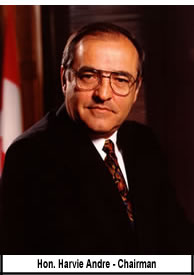

 pipeline as a golden opportunity to seize a long-sought prize, a Mackenzie Valley Highway. "This is an opportune time to do it," said Economic Development Minister Jim Antoine (Photo...


 9/1-3 (Happy Labor Day Weekend!):